

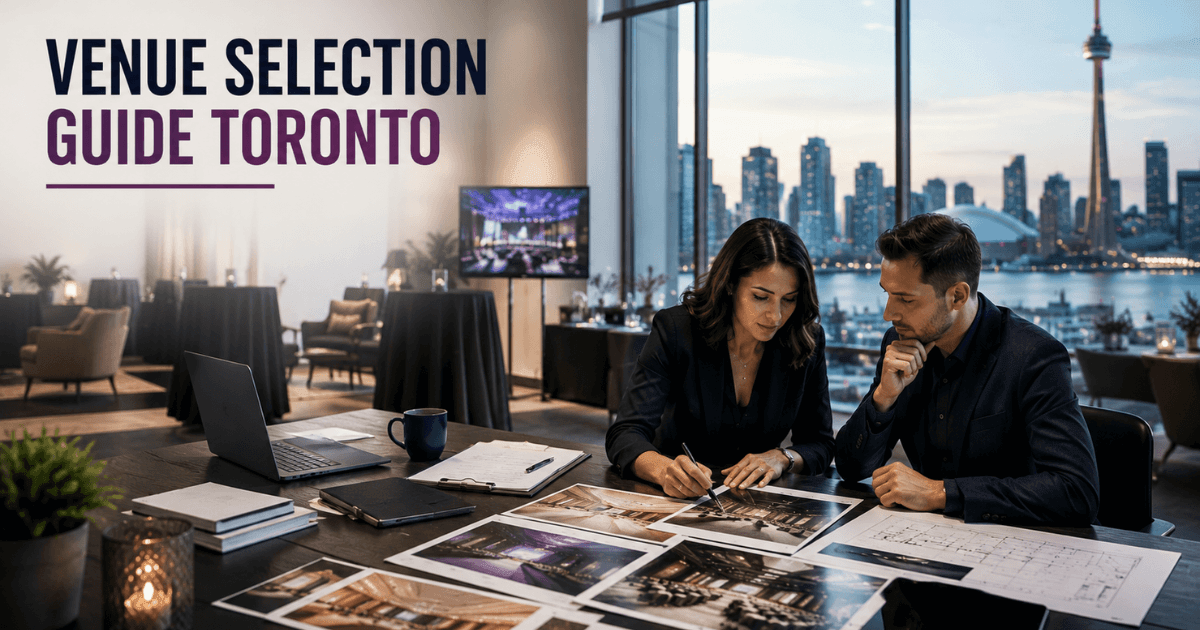
Choosing the right venue is one of the most important decisions you’ll make during the event planning process. The venue influences everything from attendee experience and event flow to production costs, technical setup, and logistics. Even with excellent speakers and professional production, the wrong venue can create unnecessary challenges that affect the success of your event.
Whether you’re organizing a conference, corporate meeting, trade show, product launch, gala dinner, fundraiser, or executive summit, selecting a venue should involve much more than comparing rental prices or room capacity. Accessibility, technical infrastructure, loading access, internet connectivity, breakout rooms, and production capabilities all play an important role.
At Summit Event Production, we’ve supported events across Toronto’s leading hotels, convention centres, and event venues through complete Conference Event Management, Corporate Event Planning, and Conference & Summit Production services. This guide explains how to evaluate venues, what questions to ask, and the key factors that contribute to a successful event.
Start With Your Event Objectives
Before visiting venues or requesting proposals, define exactly what your event needs to accomplish.
Ask yourself:
- What type of event are you hosting?
- How many attendees are expected?
- Will the event be in-person, virtual, or hybrid?
- Will there be keynote presentations?
- Are breakout sessions required?
- Will exhibitors participate?
- Is networking a major focus?
- Will entertainment be included?
Your answers help narrow your venue options and prevent you from paying for spaces that don’t meet your operational requirements.
Estimate Your Attendance Accurately
Guest count is one of the biggest factors when selecting a venue.
Choosing a venue that’s too small can create overcrowding and limit attendee comfort, while booking a venue that’s much larger than necessary may increase costs and reduce the atmosphere.
When estimating attendance, consider:
- Registered attendees
- Speakers
- Sponsors
- Exhibitors
- VIP guests
- Event staff
- Production crew
- Media representatives
It’s often helpful to allow additional capacity for late registrations and unexpected guests.
Consider the Venue Location
Convenience plays a significant role in attendee satisfaction.
Look for venues that offer:
- Easy highway access
- Public transportation
- Nearby hotels
- Parking facilities
- Restaurants
- Airports for out-of-town guests
- Accessible entrances
A centrally located venue often improves attendance while making logistics easier for vendors, speakers, and production teams.
Evaluate the Venue Layout
A venue may have enough capacity, but that doesn’t necessarily mean it’s suitable for your event.
Review:
- Ballroom size
- Meeting rooms
- Breakout spaces
- Registration area
- Networking space
- Sponsor exhibition area
- Catering space
- Storage rooms
- Green rooms
- Loading dock
A practical layout improves attendee flow while making production and logistics more efficient.
Check the Venue’s Technical Capabilities
Technical infrastructure can significantly affect both your production budget and the overall event experience.
Before booking, ask about:
- Built-in audiovisual systems
- Ceiling height
- Rigging points
- Available power
- Internet bandwidth
- Lighting controls
- Projection capabilities
- Loading access
- Equipment storage
- Control room access
Venues with strong technical infrastructure often reduce installation time and production costs.
If you’re planning a larger event, integrating professional Audio Reinforcement Services, Video Production & IMAG Services, and Production Lighting Design ensures your venue is equipped to deliver a polished attendee experience.
Consider Display & Presentation Requirements
Modern events rely heavily on visual communication.
Ask yourself:
- Will keynote presentations be delivered?
- Will presentations contain detailed graphics?
- Will sponsors require branding opportunities?
- Will live camera feeds be displayed?
- Will remote presenters participate?
Many conferences benefit from professional LED Wall Rental because LED displays remain bright and highly visible regardless of ambient lighting or room size.
If you’re deciding between different display technologies, our LED Video Wall vs Projector guide compares the strengths of each solution.
Think Beyond the Main Ballroom
Many events require more than one presentation space.
Consider whether the venue offers:
- Breakout rooms
- Workshop areas
- VIP lounges
- Speaker preparation rooms
- Media rooms
- Registration space
- Networking lounges
- Sponsor activation areas
- Outdoor event space
Having flexible spaces allows your event to accommodate multiple activities without disrupting the main program.
Review Venue Accessibility
A professional venue should be accessible to all attendees.
Look for:
- Wheelchair accessibility
- Elevators
- Accessible washrooms
- Accessible parking
- Clear directional signage
- Hearing assistance capabilities
- Accessible seating
Accessibility improves the attendee experience while helping your event accommodate a broader audience.
Visit the Venue Before Booking
Photos and floor plans provide useful information, but an onsite visit gives you a much better understanding of how the venue will function during your event.
During your walkthrough, pay attention to:
- Entrance flow
- Registration space
- Ceiling height
- Lighting conditions
- Sound quality
- Loading dock access
- Backstage areas
- Storage availability
- Parking access
- Internet reliability
Walking through the venue with your production team often helps identify opportunities and challenges that aren’t obvious on paper.
Evaluate Venue Logistics
A venue might look impressive, but logistical challenges can increase production time, labour costs, and stress on event day.
Before making a final decision, confirm:
- Loading dock availability
- Equipment access routes
- Freight elevator access
- Load-in and load-out schedules
- Parking for production vehicles
- Storage for equipment cases
- Vendor access procedures
- Security requirements
Efficient logistics help production teams install equipment safely and complete setup on schedule.
Understand the Venue’s Rules & Restrictions
Every venue has its own policies that may affect your event.
Questions to ask include:
- Are there preferred vendors?
- Are there noise restrictions?
- What are the setup and teardown hours?
- Are there rigging limitations?
- Can outside catering be used?
- Are candles or pyrotechnics permitted?
- Are there restrictions on signage or branding?
- Are there additional labour or security fees?
Knowing these requirements in advance helps avoid unexpected costs and scheduling issues.
Evaluate Internet & Connectivity
Reliable internet is essential for many modern events.
If your event includes:
- Live streaming
- Hybrid sessions
- Online registration
- Virtual presenters
- Audience engagement apps
- Cloud-based presentations
Then internet performance should be tested before event day.
Many organizations combine Virtual & Hybrid Event Production with venue internet testing to ensure remote attendees receive a smooth viewing experience.
Consider Registration & Arrival Experience
The attendee experience begins long before the opening keynote.
Look for sufficient space for:
- Registration desks
- Self-service kiosks
- Badge printing
- Welcome displays
- Directional signage
- Sponsor branding
- Coat check
- Guest waiting areas
Many organizers enhance arrival efficiency with Registration & Check-in Solutions, Registration Kiosk Rental, Wayfinding Displays, and Touch Screen Kiosks.
Think About Your Production Requirements
Production needs vary depending on the type of event you’re hosting.
Conferences
Most conferences require:
- Professional audio
- LED displays
- Stage lighting
- Breakout room AV
- Live streaming
- Recording
- Speaker support
Trade Shows
Trade shows often need:
- Booth power
- Digital signage
- Interactive displays
- Wayfinding
- Registration technology
- Sponsor branding
Many organizers combine venue planning with Trade Show Production and Trade Show Booth Building to create a more organized exhibition environment.
Gala Dinners
Gala events generally require:
- Elegant stage
- Production lighting
- Entertainment support
- Teleprompters
- Camera production
- LED backdrop
Product Launches
Product launches often include:
- Large LED video walls
- Custom staging
- Multimedia playback
- Intelligent lighting
- Live streaming
- Interactive displays
Planning production requirements early helps determine whether the venue can support the event without costly modifications.
Visit More Than One Venue
Avoid selecting the first venue you visit.
Comparing multiple venues gives you a better understanding of:
- Pricing
- Layout
- Included services
- Technical capabilities
- Staff responsiveness
- Accessibility
- Production flexibility
Even if one venue appears ideal, comparing several options often leads to better decision-making.
Ask for a Detailed Proposal
A venue quotation should clearly explain what’s included.
Review:
- Rental hours
- Setup access
- Furniture
- Cleaning
- Internet
- Security
- Parking
- Catering policies
- Overtime charges
- Additional fees
Understanding the complete proposal helps prevent unexpected expenses later in the planning process.
Work Closely With Your Production Team
Before signing a venue contract, involve your event production partner.
Production professionals can evaluate:
- Stage placement
- Audio coverage
- Viewing angles
- Lighting opportunities
- Rigging possibilities
- Equipment access
- Cable routing
- Power distribution
- Registration layout
Early collaboration helps identify potential challenges before they become expensive problems.
Organizations planning large conferences often coordinate venue walkthroughs with their Conference & Summit Production team to verify technical feasibility before confirming the venue.
Common Venue Selection Mistakes
Avoid these common mistakes:
- Choosing based only on price
- Ignoring technical infrastructure
- Underestimating attendee numbers
- Forgetting parking availability
- Not checking internet capacity
- Overlooking setup restrictions
- Ignoring accessibility requirements
- Skipping an onsite walkthrough
- Waiting too long to reserve the venue
Many of these issues can be avoided through careful planning and early communication with both the venue and your production team.
Compare Toronto’s Leading Event Venues
Every venue has its own strengths. The best choice depends on your event size, production requirements, attendee experience, and budget.
Here’s how different venue types are commonly used.
Convention Centres
Best for:
- Large conferences
- Trade shows
- Expos
- Multi-day events
- Association meetings
Convention centres typically offer:
- Large exhibition halls
- Multiple breakout rooms
- High attendee capacity
- Professional loading facilities
- Flexible staging options
Many organizers choose venues like Metro Toronto Convention Centre, Beanfield Centre, Enercare Centre, and Toronto Congress Centre for larger corporate events.
Hotels
Hotels are ideal when attendees require accommodation alongside meeting facilities.
Best for:
- Corporate meetings
- Leadership retreats
- Executive summits
- Training sessions
- Association meetings
Popular hotel venues often provide:
- Guest accommodation
- Ballrooms
- Meeting rooms
- Catering
- Business services
- Convenient downtown locations
Examples include Sheraton Centre Toronto, Fairmont Royal York, and Hotel X Toronto.
Historic & Unique Event Spaces
Some events benefit from venues with distinctive architecture and atmosphere.
These venues are well suited for:
- Gala dinners
- Award ceremonies
- Fundraising events
- Luxury receptions
- Corporate celebrations
Locations such as Arcadian Court and Liberty Grand offer elegant environments while still accommodating professional event production.
Venue Selection Checklist
Before signing your venue agreement, make sure you’ve confirmed the following:
Event Planning
- Event objectives defined
- Guest count estimated
- Budget approved
- Preferred event date confirmed
- Event format finalized
Venue
- Capacity meets attendance requirements
- Accessible location
- Parking available
- Public transportation nearby
- Breakout rooms available
- Registration space adequate
- Networking areas available
- Catering requirements confirmed
Technical Requirements
- Power availability confirmed
- Internet tested
- Ceiling height suitable
- Rigging options available
- Loading dock confirmed
- Freight elevator available
- Storage space allocated
- Production schedule approved
Production
- Audio requirements reviewed
- LED display locations identified
- Lighting positions planned
- Stage layout approved
- Camera positions confirmed
- Live streaming requirements reviewed
- Cable routes identified
- Technical rehearsal scheduled
Completing this checklist before booking a venue helps minimize operational challenges and supports a smoother production process.
Frequently Asked Questions
How far in advance should I book an event venue?
Popular venues often book several months in advance, especially during peak conference and event seasons. Reserving your venue early gives you more flexibility when selecting dates and coordinating production.
What should I look for during a venue walkthrough?
Pay attention to room layout, attendee flow, loading access, ceiling height, internet connectivity, available power, registration space, backstage areas, and existing audiovisual infrastructure.
Does the venue affect event production costs?
Yes. The venue can influence labour requirements, installation time, equipment needs, internet services, power distribution, and transportation logistics. Choosing a venue with strong technical infrastructure may reduce overall production costs.
Should I involve my production company before booking the venue?
Absolutely. An experienced production team can evaluate technical feasibility, identify potential challenges, and recommend the most efficient equipment layout before contracts are signed.
What venue features are most important for conferences?
Conference venues should offer flexible meeting rooms, reliable internet, sufficient power, professional loading access, clear sightlines, breakout spaces, and enough room for staging, audiovisual equipment, and attendee networking.
Can one venue support both in-person and hybrid events?
Yes. Many modern venues can accommodate hybrid events, but it’s important to verify internet capacity, camera positions, streaming infrastructure, and production requirements during the planning stage. Pairing the venue with Virtual & Hybrid Event Production helps ensure a seamless experience for both onsite and remote attendees.
Final Thoughts
Selecting the right venue is one of the most important decisions you’ll make during the planning process. A venue should do more than accommodate your guest count—it should support your production requirements, improve attendee flow, simplify logistics, and align with your event objectives.
By evaluating technical infrastructure, accessibility, venue layout, production capabilities, and operational requirements before signing a contract, you can avoid costly surprises and create a better experience for everyone involved.
As you continue planning, our Complete Event Planning Guide provides a step-by-step roadmap for organizing successful events. You can also explore our Event Production Checklist to stay on schedule, review the Event Production Cost Guide in Toronto to better understand budgeting, and learn how to evaluate production partners with our How to Choose the Right Event Production Company before making your final decisions.