

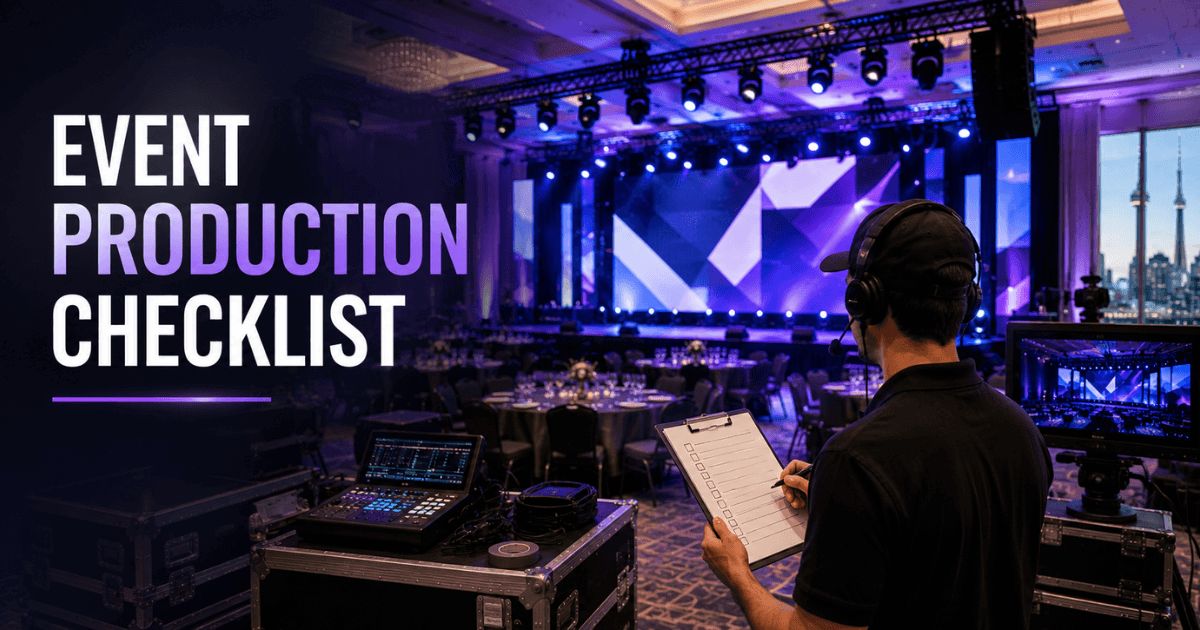
A successful event isn’t built on event day—it’s built during the weeks and months leading up to it. Whether you’re planning a conference, corporate meeting, trade show, gala dinner, product launch, or fundraising event, having a detailed checklist helps ensure that every task is completed on time and nothing important is overlooked.
Without a structured checklist, it’s easy to miss critical details such as confirming audiovisual equipment, coordinating vendors, preparing speakers, scheduling rehearsals, or finalizing venue logistics. Even small oversights can lead to unnecessary delays, additional costs, or technical issues during the event.
This guide provides a practical event production checklist covering every stage of the planning process, from defining your objectives to post-event wrap-up. While every event is different, following a proven framework helps reduce stress, improve coordination, and create a smoother experience for organizers, speakers, sponsors, and attendees.
At Summit Event Production, we support organizations across Toronto with complete Summit Event Management, Conference Event Management, Corporate Event Planning, and full Conference & Summit Production services. This checklist reflects the planning process our team follows to help clients deliver successful events from start to finish.
Phase 1: Define Your Event Objectives
Every successful event begins with a clear purpose. Before booking a venue or requesting production quotes, define exactly what you want to achieve.
Your planning checklist:
- Define the purpose of the event.
- Set measurable event goals.
- Determine your target audience.
- Estimate expected attendance.
- Select the preferred event format.
- Establish a preliminary budget.
- Choose an ideal event date.
- Build a planning timeline.
Having clear objectives makes every decision easier throughout the planning process.
Phase 2: Build Your Event Budget
Budget planning should happen before major commitments are made. A realistic budget allows you to prioritize spending while avoiding unexpected costs later.
Your budget should include:
- Venue rental
- AV production
- LED displays
- Lighting
- Staging
- Registration
- Catering
- Staffing
- Entertainment
- Marketing
- Photography & video
- Transportation
- Decorations
- Contingency fund
If you’re still estimating production expenses, our Event Production Cost Guide in Toronto and AV Budget Planning Guide explain the major cost categories in greater detail.
Phase 3: Secure the Right Venue
The venue influences your attendee experience, technical setup, production schedule, and overall event budget.
Before signing a venue contract, confirm:
- Guest capacity
- Parking availability
- Public transportation access
- Loading dock access
- Ceiling height
- Rigging capabilities
- Available power
- Internet bandwidth
- Breakout rooms
- Registration space
- Accessibility
- Catering restrictions
Many organizers compare venues such as Metro Toronto Convention Centre, Beanfield Centre, and Toronto Congress Centre before making a final decision.
Our How to Choose the Right Event Venue guide also provides additional tips for selecting the best venue.
Phase 4: Confirm Your Event Production Requirements
Production planning should begin as early as possible. Waiting until the final weeks often limits equipment availability and increases costs.
Review your production requirements:
Audio
- Professional sound system
- Wireless microphones
- Podium microphone
- Audio mixer
- Stage monitors
Many events benefit from professional Audio Reinforcement Services to ensure consistent sound quality.
Video
- LED Video Wall
- Presentation displays
- Projection (if required)
- Confidence monitors
- Video playback
- IMAG
Depending on your venue and audience size, LED Wall Rental and Video Production & IMAG Services may significantly improve the attendee experience.
Lighting
Confirm:
- Stage lighting
- Speaker lighting
- Audience lighting
- Decorative uplighting
- Intelligent lighting
- Spotlight requirements
Professional Production Lighting Design helps create an engaging atmosphere while improving presentation visibility.
Staging
Review staging requirements including:
- Stage size
- Podium
- Backdrop
- Scenic elements
- Truss structures
- Stage access
For custom presentation environments, many organizers incorporate Scenic Design & Custom Staging into their production plan.
Phase 5: Registration & Attendee Experience
Registration is often the first impression attendees have of your event. A well-organized check-in process helps reduce queues and creates a professional welcome.
Your registration checklist should include:
- Registration platform
- Badge printing
- QR code check-in
- Registration counters
- Self-service kiosks
- Digital signage
- Welcome displays
- Wayfinding
- Meeting timers
Many events combine Registration & Check-in Solutions with Registration Kiosk Rental, Wayfinding Displays, and Meeting Timer Rental to improve the attendee journey from arrival through the final session.
Phase 6: Confirm Vendors & Production Partners
Well before event week, make sure every supplier has confirmed their responsibilities and delivery schedule.
Your vendor checklist should include:
- Venue confirmed
- Catering confirmed
- AV production team confirmed
- Decor confirmed
- Entertainment confirmed
- Photographer confirmed
- Videographer confirmed
- Internet provider confirmed
- Security confirmed
- Transportation confirmed
- Vendor contact list completed
Working with a single production company instead of multiple independent suppliers often simplifies communication and improves coordination throughout the project.
Phase 7: Prepare Speakers & Presentation Content
Your speakers play a central role in the success of your event. Giving them enough preparation time helps presentations run smoothly while reducing last-minute technical issues.
Speaker checklist
- Confirm all speakers
- Collect presentation slides
- Verify presentation formats
- Test embedded videos
- Confirm presentation order
- Prepare speaker introductions
- Collect biographies
- Confirm session timings
- Share presentation guidelines
If keynote speakers require additional support, consider including Teleprompter Rental to help them deliver presentations confidently.
Phase 8: Plan Live Streaming & Hybrid Production
If your event includes remote attendees, planning your virtual experience should happen alongside your onsite production—not as an afterthought.
Hybrid event checklist
- Select your streaming platform
- Confirm internet bandwidth
- Plan camera positions
- Prepare remote speaker workflows
- Test streaming quality
- Configure recording
- Prepare presentation switching
- Assign livestream moderators
- Test audience interaction features
Many conferences integrate Virtual & Hybrid Event Production with Simultaneous Interpretation Services to support both multilingual and remote audiences.
Phase 9: Confirm Equipment Delivery & Installation
Several days before the event, finalize equipment logistics to ensure everything arrives on schedule.
Equipment checklist
- LED video walls
- Audio systems
- Lighting fixtures
- Truss systems
- Generators
- Staging
- Digital displays
- Registration kiosks
- Charging stations
- Backup equipment
Depending on your production requirements, you may need equipment such as Lighting Rental, Audio Rental, Truss Rental, Generator Rental, or LED Trailer Rental for outdoor and large-scale events.
Phase 10: Schedule Technical Rehearsals
One of the biggest differences between average events and professionally executed events is rehearsal.
Technical rehearsals allow every department to test equipment, verify schedules, and identify potential issues before attendees arrive.
Rehearsal checklist
- Audio testing
- LED wall testing
- Presentation playback
- Lighting cues
- Camera positions
- Microphone testing
- Livestream testing
- Speaker walk-through
- Stage transitions
- Backup equipment verification
A full rehearsal gives both presenters and technicians confidence before the live event begins.
Phase 11: Event Day Operations Checklist
When event day arrives, your planning shifts from preparation to execution.
Before attendees arrive
- Registration desks ready
- Directional signage installed
- LED screens tested
- Audio system checked
- Lighting programmed
- Presentations loaded
- Internet tested
- Cameras positioned
- Staff briefing completed
- Emergency contacts distributed
During the event
Monitor:
- Registration flow
- Session timing
- Speaker transitions
- Audio quality
- Video playback
- Livestream quality
- Audience engagement
- Break schedules
- Vendor coordination
- Technical issues
Many large conferences rely on Technical Direction & Show Calling to coordinate every cue, presenter, technician, and schedule change throughout the event.
Phase 12: Post-Event Wrap-Up
The event isn’t complete when the last attendee leaves.
A structured wrap-up helps improve future events while ensuring all project tasks are completed.
Post-event checklist
- Equipment teardown
- Venue inspection
- Vendor sign-off
- Return rental equipment
- Collect attendee feedback
- Gather sponsor feedback
- Review technical performance
- Analyze attendance data
- Organize event photos and videos
- Conduct an internal debrief
Taking time to review the event provides valuable insights that can strengthen planning for future projects.
Common Items People Forget
Even experienced planners occasionally overlook small details that become important on event day.
Don’t forget to check:
- Extension cords
- Power strips
- Backup laptops
- Laptop adapters
- Clickers
- Presentation remotes
- Laser pointers
- Gaffer tape
- Batteries
- Charging cables
- Water for speakers
- Printed agendas
- Name badges
- Emergency contact list
- First aid kit
These small items often make a big difference during live event execution.
Keep Everyone Working From One Checklist
One of the simplest ways to reduce confusion is to use a single master checklist that is shared with every department involved in the event.
Your planning team, venue coordinator, production manager, AV technicians, registration staff, speakers, and vendors should all be working from the same schedule and task list. This improves communication, reduces duplicated work, and helps ensure that every milestone is completed on time.
Rather than treating planning, production, and logistics as separate activities, bringing them together into one coordinated workflow creates a more efficient event and a better experience for everyone involved.
Event Production Timeline Checklist
A successful event doesn’t happen because every task gets completed—it happens because every task gets completed at the right time.
Below is a practical timeline that many professional event planners use to stay organized.
6–12 Months Before
- Define event objectives
- Set preliminary budget
- Confirm event date
- Shortlist venues
- Build the planning team
- Identify sponsors
- Request production quotations
- Develop the event timeline
3–6 Months Before
- Confirm venue
- Finalize production partner
- Book speakers
- Launch registration
- Confirm exhibitors
- Begin marketing
- Reserve equipment
- Confirm catering
1–3 Months Before
- Finalize event agenda
- Confirm all vendors
- Approve stage design
- Finalize AV requirements
- Order signage
- Collect presentations
- Confirm staffing schedules
- Schedule rehearsals
Final Week
- Confirm equipment delivery
- Test presentation files
- Complete technical rehearsal
- Verify registration systems
- Final venue walkthrough
- Confirm transportation
- Review emergency procedures
- Conduct team briefing
Event Day
- Registration opens
- Equipment tested
- Speaker briefing
- Session management
- Live production
- Audience support
- Technical monitoring
- Event wrap-up
After the Event
- Equipment removal
- Venue inspection
- Collect attendee feedback
- Review production performance
- Share recordings
- Analyze event KPIs
- Conduct internal debrief
Event Production Checklist by Event Type
Although the planning process remains similar, every event type has its own production priorities.
Conferences
Focus on:
- Professional presentation systems
- Breakout room AV
- Speaker support
- Registration
- Live streaming
- Session management
Organizations planning conferences often combine Conference Event Management with Conference & Summit Production for a fully coordinated event experience.
Trade Shows
Prioritize:
- Booth construction
- Exhibitor power
- Registration
- Wayfinding
- Digital signage
- Sponsor branding
- Networking spaces
Many exhibition organizers also use Trade Show Booth Building alongside Trade Show Production to streamline exhibitor setup and visitor flow.
Product Launches
Focus on:
- LED displays
- Stage reveals
- Brand visuals
- Video production
- Lighting
- Live streaming
- Photography
Gala & Awards
Prioritize:
- Elegant stage design
- Lighting ambience
- Entertainment
- Teleprompters
- Camera coverage
- Award presentation timing
Outdoor Events
Don’t forget:
- Weather contingency
- Generator power
- Tent structures
- Outdoor LED displays
- Wind safety
- Equipment protection
Outdoor productions often require Generator Rental, Tent Rental, and Outdoor & Experiential Events planning to ensure reliable operations regardless of conditions.
Why Professional Event Production Makes the Difference
Planning an event involves coordinating dozens of moving parts, from venue logistics and vendor management to technical production and attendee experience. As events become larger and more complex, relying on a structured production process helps reduce risk, improve communication, and keep everything running according to schedule.
Working with an experienced production partner means every detail—from registration and stage management to audiovisual systems and live event execution—is coordinated through a single team. This approach minimizes last-minute issues, simplifies communication, and allows organizers to focus on their guests instead of operational challenges.
Whether you’re planning a corporate meeting, conference, trade show, gala dinner, fundraiser, or product launch, having experienced professionals manage the technical side of your event helps ensure a smoother and more successful experience.
Frequently Asked Questions
Why is an event production checklist important?
A checklist keeps every task organized, ensures deadlines are met, and reduces the risk of missing important production details before event day.
When should event production planning begin?
Large conferences and exhibitions often begin planning six to twelve months in advance, while smaller meetings and corporate events may require only a few months depending on complexity.
What should every production checklist include?
A comprehensive checklist should cover budgeting, venue selection, audiovisual production, lighting, staging, registration, staffing, rehearsals, logistics, contingency planning, and post-event evaluation.
Should I create separate checklists for different event types?
Yes. Conferences, trade shows, galas, product launches, and outdoor events all have different production priorities. Creating event-specific checklists helps ensure nothing is overlooked.
How do I keep my production team organized?
Use one master production schedule that is shared with planners, venue staff, vendors, technicians, and speakers. A centralized timeline improves communication and keeps everyone aligned throughout the project.
Is a technical rehearsal really necessary?
Absolutely. Technical rehearsals allow the production team to test equipment, verify presentations, review transitions, and resolve issues before attendees arrive, helping the event run more smoothly.
Final Thoughts
An event production checklist is more than a simple task list—it’s a roadmap that keeps every stage of your event organized, from initial planning through final teardown. By following a structured timeline, coordinating vendors early, confirming technical requirements, and preparing for unexpected challenges, you can significantly improve the chances of delivering a successful event.
If you’re still planning your event, our Complete Event Planning Guide provides a step-by-step overview of the planning process. You can also explore our AV Budget Planning Guide to better understand production costs, our Event Equipment Rental Guide for selecting the right equipment, and our How to Choose the Right Event Production Company to help you evaluate potential production partners before your next event.