

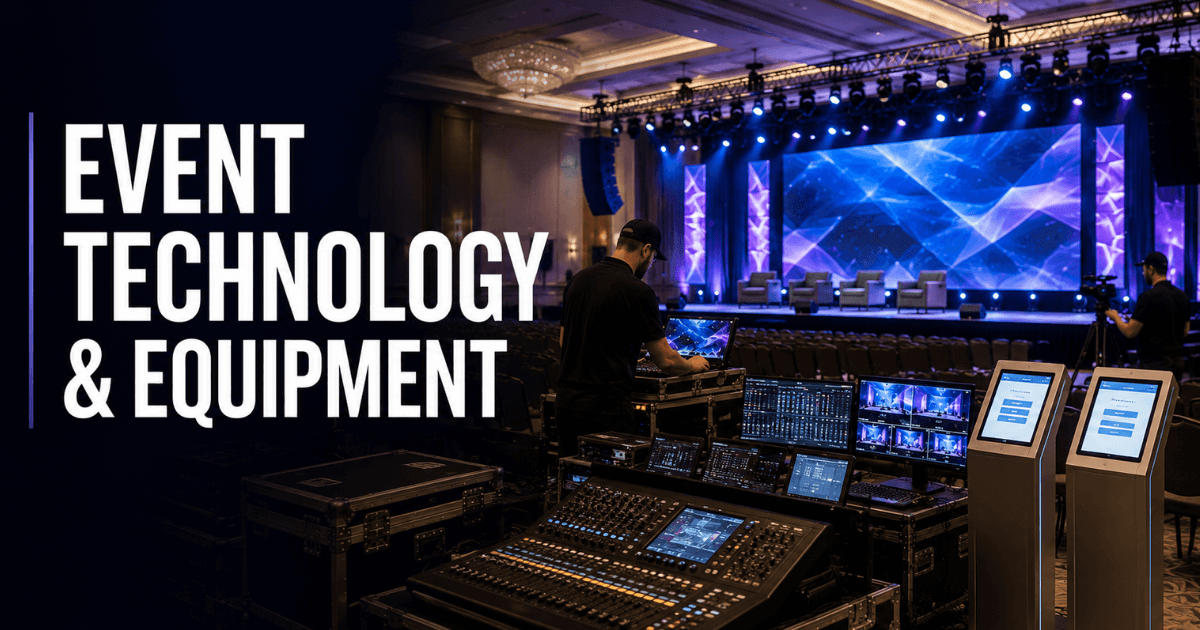
Modern events rely on much more than a stage and a microphone. Today’s conferences, trade shows, corporate meetings, product launches, gala dinners, and hybrid events depend on a wide range of event technology working together to create a seamless experience for attendees, speakers, exhibitors, and organizers.
From LED video walls and professional audio systems to registration kiosks, live streaming, interactive displays, and lighting design, every piece of technology plays a specific role. Understanding how these systems work—and when they should be used—helps event planners make better decisions while avoiding unnecessary costs and technical challenges.
Whether you’re organizing a small corporate meeting or a large multi-day conference, knowing the purpose of different event technologies allows you to build a production plan that supports your event objectives.
At Summit Event Production, we provide complete event technology and production solutions throughout Toronto, including Conference Event Management, Conference & Summit Production, AV production, equipment rental, and technical support. This guide explains the most commonly used event technologies and how they contribute to successful event execution.
What Is Event Technology?
Event technology refers to the equipment, software, and technical systems used to plan, manage, present, and operate an event.
These technologies support every stage of the attendee experience, including:
- Registration
- Presentations
- Communication
- Audience engagement
- Live streaming
- Exhibitor interaction
- Event operations
- Post-event content
Rather than viewing each technology separately, successful event production combines multiple systems into one coordinated solution.
LED Video Walls
LED video walls have become one of the most recognizable technologies used at modern events.
They provide bright, seamless displays for:
- Keynote presentations
- Sponsor branding
- Product launches
- Live camera feeds
- Entertainment
- Conference stages
- Digital backdrops
Unlike projection systems, LED walls remain highly visible even in brightly lit venues.
Professional LED Wall Rental allows organizers to customize screen size based on audience size, venue dimensions, and presentation requirements.
If you’re comparing display technologies, our LED Video Wall vs Projector guide explains when each solution is most appropriate.
Professional Audio Systems
Clear audio is one of the most important elements of any successful event.
Professional sound systems typically include:
- Line array speakers
- Wireless microphones
- Headset microphones
- Podium microphones
- Digital audio mixers
- Stage monitors
- Audio processors
Whether attendees are seated in the front row or the back of the ballroom, properly designed audio systems ensure everyone hears presentations clearly.
Many conferences rely on professional Audio Reinforcement Services to optimize sound quality throughout the venue.
Stage Lighting
Lighting affects far more than visibility.
Professional lighting helps:
- Highlight presenters
- Support video production
- Improve audience focus
- Enhance stage design
- Reinforce branding
- Create atmosphere
Common lighting equipment includes:
- LED stage lighting
- Moving lights
- Spotlights
- Wash lighting
- Uplighting
- Audience lighting
Professional Production Lighting Design ensures lighting supports both the live audience and any cameras recording or streaming the event.
Video Production & IMAG
Large events often require more than presentation screens.
Video production systems support:
- Camera recording
- Live switching
- Broadcast production
- Session recording
- IMAG (Image Magnification)
- Speaker close-ups
- Livestream feeds
Displaying live camera footage on large screens helps attendees seated farther away clearly see presenters during keynote sessions.
Professional Video Production & IMAG Services are commonly used for conferences, conventions, award ceremonies, and product launches.
Registration Technology
The attendee experience begins before anyone enters the event space.
Modern registration technology includes:
- Online registration
- QR code check-in
- Badge printing
- Self-service kiosks
- Digital welcome displays
- Queue management
- Audience tracking
Many organizations improve arrival efficiency through Registration & Check-in Solutions and Registration Kiosk Rental, reducing wait times while creating a smoother check-in process.
Interactive Event Technology
Interactive technologies help increase attendee engagement throughout the event.
Popular solutions include:
- Touch screen kiosks
- LED poster displays
- Wayfinding displays
- Audience response systems
- Charging stations
- Digital information displays
These technologies make it easier for attendees to navigate venues, access information, participate in sessions, and interact with exhibitors.
Many conferences combine Touch Screen Kiosks, LED Poster Displays, Wayfinding Displays, and Audience Response Systems to create a more engaging attendee experience.
Scenic Design & Staging
Technology performs best when integrated into a well-designed stage environment.
Scenic production may include:
- Modular stages
- Podiums
- Branded backdrops
- Truss systems
- Custom scenic elements
- Stage furniture
Professional Scenic Design & Custom Staging combines technical functionality with visual design to create an environment that supports presentations while reinforcing your brand.
Live Streaming & Hybrid Event Technology
As events increasingly combine in-person and virtual audiences, live streaming has become a core part of event production rather than an optional add-on.
Modern hybrid events often include:
- Multi-camera production
- Live streaming platforms
- Remote presenters
- Virtual attendees
- Live recording
- Audience interaction
- Real-time presentation switching
Professional Virtual & Hybrid Event Production helps create a consistent experience for attendees regardless of where they are participating.
Simultaneous Interpretation Systems
International conferences frequently require multilingual communication.
Simultaneous interpretation technology allows attendees to listen to presentations in their preferred language without interrupting the speaker.
A typical interpretation setup may include:
- Interpreter booths
- Interpretation consoles
- Wireless receivers
- Headsets
- Interpreter microphones
- Audio distribution systems
Many organizations combine Simultaneous Interpretation Services with Simultaneous Interpretation Equipment to support international conferences and multilingual meetings.
Technical Direction & Show Calling
Large events involve dozens of moving parts that need to happen at exactly the right moment.
Technical direction coordinates:
- Speaker entrances
- Presentation switching
- Lighting cues
- Audio transitions
- Video playback
- Camera changes
- Entertainment timing
- Live streaming coordination
Professional Technical Direction & Show Calling ensures every department works from the same production schedule, allowing the event to run smoothly from beginning to end.
Event Power & Infrastructure
Even the most advanced technology depends on reliable power and infrastructure.
Production planning often includes:
- Power distribution
- Electrical load calculations
- Backup generators
- Cable management
- Network infrastructure
- Internet redundancy
Outdoor events frequently require Generator Rental to provide dependable power for audiovisual systems, lighting, and production equipment.
Event Technology for Different Event Types
Different events rely on different combinations of technology.
Conferences
Common technologies include:
- LED video walls
- Professional audio
- Stage lighting
- Presentation systems
- Registration kiosks
- Live streaming
- Meeting timers
Most conferences integrate these technologies through Conference & Summit Production to create a seamless attendee experience.
Trade Shows
Trade shows often require:
- Digital signage
- LED poster displays
- Touch screen kiosks
- Booth AV systems
- Wayfinding displays
- Audience engagement tools
Many organizers combine these technologies with Trade Show Production and Trade Show Booth Building to improve exhibitor and visitor engagement.
Corporate Meetings
Corporate meetings commonly use:
- Presentation displays
- Professional audio
- Wireless microphones
- Video conferencing
- Camera recording
- Live streaming
The technology selected typically depends on meeting size and whether remote participation is required.
Product Launches
Product launches often rely on:
- Large LED displays
- Dynamic lighting
- Video production
- Interactive technology
- Live streaming
- Multimedia playback
These technologies help create a memorable experience while showcasing new products effectively.
Outdoor Events
Outdoor productions generally require:
- Mobile LED trailers
- Outdoor audio systems
- Weather-resistant lighting
- Generator power
- Cable protection
- Tent structures
Many outdoor productions combine LED Trailer Rental with Outdoor & Experiential Events to simplify deployment while maintaining reliable performance.
How Different Technologies Work Together
Successful events rarely depend on one piece of equipment. Instead, multiple technologies work together to create a complete production system.
For example, a conference might combine:
- Registration kiosks for attendee check-in
- LED video walls for presentations
- Professional audio for clear communication
- Stage lighting for visibility
- Cameras for recording and IMAG
- Live streaming for remote audiences
- Wayfinding displays for navigation
- Technical direction for show control
When these systems are properly integrated, attendees experience a smooth, professional event without noticing the complexity behind the scenes.
Common Event Technology Mistakes
Technology issues are often caused by planning rather than equipment.
Common mistakes include:
- Choosing equipment that’s too small
- Underestimating internet requirements
- Booking technology too late
- Ignoring venue power limitations
- Skipping technical rehearsals
- Using multiple vendors without coordination
- Forgetting backup equipment
- Overlooking attendee accessibility
Most of these problems can be avoided through early planning and working with an experienced production team.
Planning Technology Around Your Goals
Rather than selecting technology because it’s popular, choose solutions that support your event objectives.
Before confirming your equipment, ask:
- What experience do you want attendees to have?
- Will presentations rely heavily on visuals?
- Do remote attendees need to participate?
- Will sponsors require digital branding?
- Is audience interaction important?
- Does the venue support your technical requirements?
Answering these questions helps ensure every piece of technology contributes to the success of your event instead of adding unnecessary complexity.
Choosing the Right Event Technology
Every event has different objectives, audiences, and technical requirements. Instead of selecting equipment individually, choose technologies that work together to support the overall event experience.
Corporate Meetings
Common technologies include:
- Professional audio systems
- Presentation displays
- Wireless microphones
- Video conferencing
- Meeting timers
These technologies provide reliable communication without unnecessary production complexity.
Conferences & Summits
Large conferences typically require a complete production ecosystem, including:
- LED video walls
- Professional audio
- Stage lighting
- Camera production
- Live streaming
- Registration technology
- Wayfinding displays
- Technical direction
Many organizations combine Conference Event Management with Conference & Summit Production to ensure every technology works together throughout the event.
Trade Shows
Trade shows focus heavily on attendee engagement and exhibitor visibility.
Common technologies include:
- Digital signage
- LED poster displays
- Touch screen kiosks
- Booth AV systems
- Interactive displays
- Registration technology
Many exhibition organizers integrate these solutions with Trade Show Booth Building and Trade Show Production to create an engaging exhibition environment.
Product Launches
Product launches often prioritize visual impact and audience engagement.
Typical technologies include:
- LED video walls
- Intelligent lighting
- Professional audio
- Video production
- Multimedia playback
- Live streaming
These technologies help showcase products while creating an immersive brand experience.
Outdoor Events
Outdoor productions require additional infrastructure to ensure reliable performance.
Common technologies include:
- Mobile LED trailers
- Outdoor sound systems
- Generator power
- Weather-resistant lighting
- Tent structures
- Outdoor staging
Many organizers combine LED Trailer Rental with Generator Rental and Outdoor & Experiential Events to support festivals, community events, and public activations.
Event Technology Checklist
Before event day, confirm every technology requirement has been reviewed.
Display Technology
- LED video wall or projector selected
- Screen size confirmed
- Content resolution verified
- Video processor configured
Audio
- Speakers selected
- Microphones confirmed
- Audio mixer configured
- Stage monitors positioned
Lighting
- Stage lighting installed
- Audience lighting adjusted
- Lighting cues programmed
- Backup fixtures available
Video Production
- Cameras positioned
- Recording tested
- IMAG configured
- Livestream verified
Registration
- Online registration tested
- Badge printers ready
- Registration kiosks configured
- QR code scanners working
Interactive Technology
- Touch screen kiosks tested
- LED posters updated
- Wayfinding displays configured
- Audience response systems ready
Infrastructure
- Internet tested
- Power confirmed
- Generator available (if required)
- Cable routing completed
- Backup equipment prepared
Completing this checklist before the event helps reduce technical issues and ensures every system is ready for attendees.
Frequently Asked Questions
What is event technology?
Event technology includes the equipment and systems used to manage, present, and operate an event, including audio systems, LED displays, lighting, registration technology, live streaming, video production, and interactive attendee tools.
What equipment is essential for most corporate events?
Most corporate events require professional audio, presentation displays or LED video walls, wireless microphones, stage lighting, and registration technology. Larger events may also require camera production, live streaming, and interactive displays.
Why is LED technology so popular at events?
LED displays provide bright, high-resolution visuals that remain visible even in well-lit venues. They are highly flexible, scalable, and suitable for conferences, exhibitions, product launches, and outdoor events.
Do I need live streaming for my event?
If remote attendees, virtual speakers, or post-event recordings are part of your event strategy, live streaming should be included in the production plan from the beginning.
How do I know what technology my event needs?
Your technology requirements depend on the event type, venue, audience size, presentation format, and production goals. Working with an experienced production team helps ensure you select the right combination of equipment without overspending.
Should I rent or buy event technology?
For most organizations, renting is the more practical option. Rental services provide access to current technology, professional installation, onsite technical support, and maintenance without the long-term costs of ownership.
Final Thoughts
Event technology is no longer just a supporting element—it plays a central role in how attendees experience your event. From registration and presentations to lighting, live streaming, and audience engagement, every technology should work together to support your objectives rather than operate as separate systems.
Whether you’re planning a corporate meeting, conference, trade show, product launch, or outdoor event, understanding how different technologies fit together helps you make informed decisions, control costs, and deliver a more professional experience.
If you’re planning an upcoming event, our Complete Event Planning Guide provides a step-by-step planning framework, while the Event Equipment Rental Guide explains how to select the right equipment for your venue and audience. You can also explore the Event Production Checklist to stay organized and review How to Choose the Right Event Production Company to help you select the right production partner for your next event.