

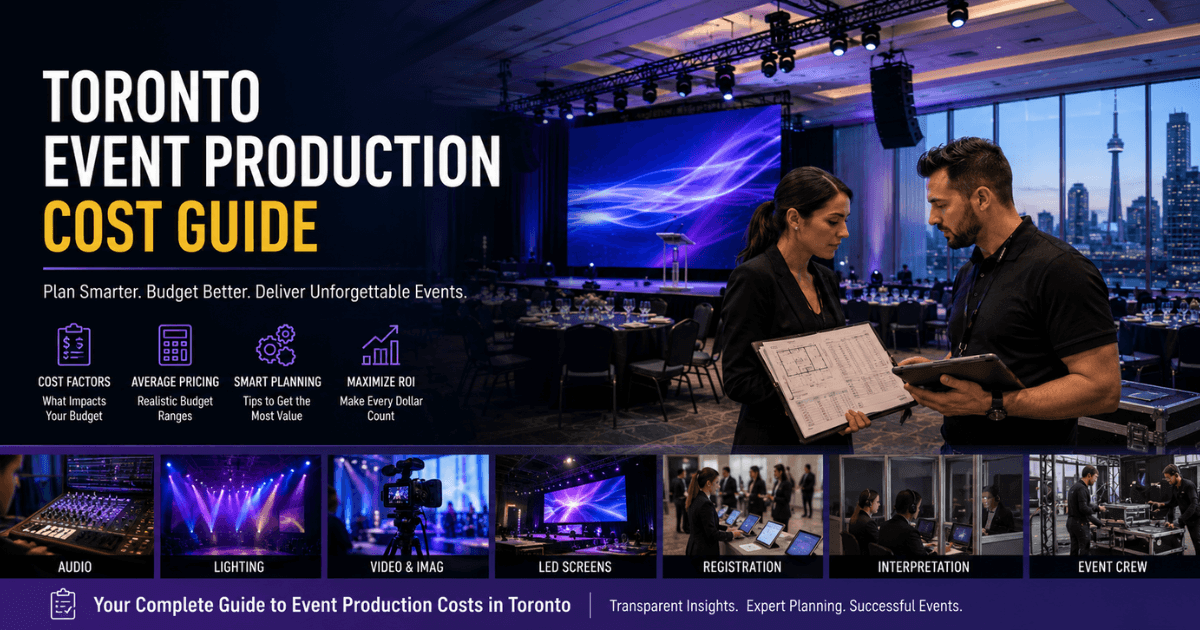
Planning an event in Toronto involves more than selecting a venue and inviting guests. Behind every successful conference, corporate meeting, gala, product launch, or trade show is a carefully planned production budget that covers audiovisual equipment, staging, lighting, staffing, logistics, and technical support. Understanding where your budget goes helps you make informed decisions while delivering a professional experience for your attendees.
Whether you’re organizing a small executive meeting or a multi-day convention, production costs vary depending on the event type, venue, audience size, technical requirements, and production complexity. Working with an experienced production partner early in the planning process can help avoid unnecessary expenses while ensuring every technical element supports your event goals.
At Summit Event Production, we help organizations plan and deliver events across Toronto with scalable production solutions tailored to different budgets and event requirements. From Conference Event Management and Corporate Event Planning to complete Conference & Summit Production, our team works closely with clients to balance production quality, audience experience, and overall project costs.
This guide explains the major factors that influence event production costs in Toronto, typical budget categories, ways to reduce unnecessary expenses, and how to build a realistic production budget for your next event.
What Determines Event Production Costs?
There is no fixed price for event production because every event has unique objectives, technical requirements, and operational challenges. Instead of focusing only on equipment rental, production budgets should consider every element required to successfully deliver the event.
The biggest factors include:
- Event type
- Venue selection
- Audience size
- Event duration
- Production complexity
- Equipment requirements
- Staffing requirements
- Installation and dismantling
- Live streaming or hybrid production
- Custom scenic design
- Event schedule and rehearsal time
Each of these variables can significantly influence your overall investment.
Event Type Has the Biggest Impact on Cost
Different events require different levels of production support. A corporate board meeting has very different technical needs than a trade show or a concert.
For example:
Corporate Conferences
Corporate conferences often require professional presentation systems, wireless microphones, LED displays, breakout room AV, livestream capabilities, and onsite technical management.
Organizations planning conferences typically combine services such as Conference & Summit Production with Audio Reinforcement Services and Video Production & IMAG Services to ensure clear communication throughout the event.
Trade Shows & Exhibitions
Trade shows generally involve larger production budgets due to exhibition booths, sponsor activations, registration systems, digital signage, lighting, staging, and multiple presentation areas.
Many organizers also invest in Trade Show Production and Trade Show Booth Building to create engaging exhibitor experiences.
Gala Dinners & Awards
Awards ceremonies and gala events often require elegant lighting, scenic staging, LED backdrops, teleprompters, professional audio, entertainment support, and live camera production.
Production budgets frequently include services like Gala & Awards Event Production alongside Production Lighting Design and Scenic Design & Custom Staging.
Product Launch Events
Product launches focus heavily on audience engagement and brand presentation. High-impact visuals, custom staging, LED video walls, synchronized lighting, live streaming, and multimedia playback are common production investments.
Many companies choose complete Product Launch Event Production services to ensure a polished and memorable launch experience.
Venue Selection Can Significantly Affect Your Budget
The venue you choose directly impacts production costs. Every venue has different loading procedures, ceiling heights, rigging capabilities, power availability, setup windows, and technical regulations.
Some venues already include basic audiovisual systems, while others require every production element to be brought in separately.
Popular Toronto venues such as Metro Toronto Convention Centre, Beanfield Centre, Enercare Centre, and Toronto Congress Centre each have unique operational requirements that influence installation schedules, crew requirements, and production planning.
Selecting a venue that aligns with your event goals can often reduce unnecessary production expenses while simplifying logistics.
Major Event Production Budget Categories
A typical production budget is divided into several key categories.
Audio Visual Production
This includes professional sound systems, wireless microphones, digital mixers, presentation systems, monitors, and technical operation.
Depending on the event, organizers may also require dedicated Audio Reinforcement Services to ensure clear coverage throughout the venue.
LED Displays & Visual Technology
Visual presentation has become one of the largest production investments for modern events.
Budgets may include:
- LED Wall Rental
- LED Poster Displays
- Touch Screen Kiosks
- Projection systems
- Confidence monitors
- Digital signage
The right display technology depends on venue size, audience distance, ambient lighting, and presentation objectives.
Lighting Production
Lighting affects both audience experience and production quality.
Budgets often include:
- Stage lighting
- Speaker lighting
- Intelligent lighting
- Architectural lighting
- Uplighting
- Audience lighting
Professional Production Lighting Design ensures every presentation, performance, and broadcast looks polished while supporting the event atmosphere.
Event Staffing & Technical Crew
Professional equipment alone cannot guarantee a successful event. Experienced technicians, production managers, camera operators, lighting specialists, stage managers, and audiovisual engineers are equally important.
Depending on the complexity of your event, staffing costs may include:
- Production Managers
- AV Technicians
- Lighting Operators
- Audio Engineers
- Camera Operators
- Video Directors
- Stage Managers
- Show Callers
- Registration Staff
Many organizations choose professional Event Staffing Services to ensure every aspect of the event is managed by experienced personnel.
Registration & Attendee Management
Registration is often overlooked during budgeting, yet it has a significant impact on the attendee experience.
Your registration budget may include:
- Registration software
- Badge printing
- Check-in stations
- Self-service kiosks
- QR code scanners
- Digital wayfinding
- Meeting timers
- Audience interaction tools
Depending on your event requirements, integrating Registration & Check-in Solutions with Registration Kiosk Rental and Audience Response Systems can improve attendee flow while reducing long queues.
Live Streaming & Hybrid Event Costs
Many Toronto events now include remote participants, making live streaming and hybrid production part of the overall budget.
Typical costs may include:
- Multi-camera production
- Live switching
- Streaming platforms
- Internet redundancy
- Recording
- Virtual speaker support
- Remote audience management
Businesses planning nationwide or international events often combine Virtual & Hybrid Event Production with Video Production & IMAG Services to create a seamless experience for both onsite and virtual audiences.
Equipment Rental vs Purchasing
One common question organizers ask is whether they should purchase equipment or rent it.
For most conferences, trade shows, and corporate events, renting provides better value because it includes professional installation, technical support, transportation, and access to the latest technology.
Frequently rented equipment includes:
- LED Wall Rental
- Audio Rental
- Lighting Rental
- Truss Rental
- Generator Rental
- Tent Rental
- Teleprompter Rental
Renting also eliminates storage, maintenance, transportation, and equipment depreciation costs.
How Audience Size Affects Your Budget
Audience size is one of the biggest factors influencing production costs.
Small Events (20–100 Guests)
These events generally require:
- Presentation display
- Small audio system
- Wireless microphones
- Basic stage lighting
Medium Events (100–500 Guests)
As attendance grows, production requirements typically expand to include:
- LED video walls
- Larger audio systems
- Scenic staging
- Multiple wireless microphones
- Camera production
- Registration technology
Large Events (500–2,000+ Guests)
Large conferences and exhibitions often require:
- Multiple LED walls
- IMAG systems
- Multi-room AV
- Live streaming
- Show calling
- Extensive staging
- Technical crew
- Registration systems
- Wayfinding displays
Production complexity increases significantly with audience size, making early planning essential.
Hidden Costs Many Organizers Forget
One of the biggest budgeting mistakes is focusing only on visible equipment costs while overlooking operational expenses.
Commonly forgotten items include:
- Freight and transportation
- Labour and setup
- Overnight security
- Internet connectivity
- Venue power requirements
- Rigging approvals
- Rehearsal time
- Overtime charges
- Backup equipment
- Contingency planning
- Equipment testing
- Event insurance
Accounting for these items from the beginning helps prevent unexpected expenses later in the planning process.
How to Reduce Event Production Costs Without Sacrificing Quality
Reducing costs doesn’t necessarily mean reducing quality. Strategic planning often delivers better value than simply choosing the lowest-priced supplier.
Some practical ways to manage your budget include:
Plan Early
Booking production services well in advance provides more flexibility and avoids last-minute costs.
Bundle Services
Working with a single production partner for planning, AV, staging, lighting, registration, and technical management can reduce coordination costs and simplify communication.
Match Technology to Your Event
Not every event requires the largest LED wall or the most complex lighting system. Selecting equipment based on your audience size and venue can optimize both performance and budget.
Select the Right Venue
Choosing a venue that supports your technical requirements can reduce installation time, labour, and equipment needs. Our How to Choose the Right Event Venue guide explains the key factors to evaluate before booking.
Build a Detailed Budget
Creating a realistic budget early helps prioritize spending and reduces the likelihood of unexpected costs. You can also explore our AV Budget Planning Guide for practical budgeting strategies.
Every Event Has Different Budget Priorities
A conference may prioritize presentation technology and breakout room AV, while a gala focuses on lighting, staging, and entertainment. A trade show often requires exhibitor support, digital signage, and registration systems, whereas a product launch typically emphasizes visual impact and audience engagement.
Instead of applying a one-size-fits-all approach, successful event budgets allocate resources based on the event’s objectives, audience expectations, and venue requirements. Working with an experienced production partner helps ensure your investment is directed toward the elements that will have the greatest impact on the overall event experience.
Event Production Cost Ranges in Toronto
While every event is unique, understanding general pricing categories can help you establish realistic expectations before requesting quotes.
| Event Type | Typical Production Requirements |
|---|---|
| Executive Meetings | AV system, microphones, presentation display, lighting |
| Corporate Conferences | LED video wall, professional audio, staging, lighting, registration |
| Trade Shows | Exhibition AV, booth technology, digital signage, registration, networking areas |
| Product Launches | Custom staging, LED displays, lighting, multimedia playback, livestream |
| Gala & Awards | Elegant lighting, stage design, audio, teleprompters, video production |
| Hybrid Events | Live streaming, cameras, virtual platform, recording, technical crew |
Rather than focusing only on price, compare the overall value offered by each production partner, including equipment quality, technical expertise, onsite support, and project management.
Questions to Ask Before Requesting an Event Production Quote
Not all event production quotes include the same services. Asking the right questions upfront can help you compare proposals more accurately and avoid unexpected costs later.
Consider asking:
- What equipment is included in the quotation?
- Does the quote include delivery, setup, and teardown?
- Are onsite technicians included throughout the event?
- Are rehearsals included?
- Is backup equipment available if needed?
- Are labour, transportation, and logistics included?
- What happens if the event schedule changes?
- Can additional equipment be added later if required?
A detailed proposal should clearly outline what is included, what is optional, and any potential additional charges.
Why Planning Early Saves Money
One of the most effective ways to control event production costs is to begin planning early. Early planning provides more flexibility when selecting venues, scheduling production crews, and reserving equipment.
It also allows time to:
- Compare production options
- Finalize technical requirements
- Schedule site visits
- Conduct rehearsals
- Coordinate venue logistics
- Optimize staffing requirements
- Prevent last-minute rental shortages
Whether you’re organizing a conference, gala, exhibition, or product launch, early preparation often leads to a smoother event and a more efficient use of your production budget.
Why Work with a Full-Service Event Production Partner?
Managing multiple suppliers for staging, lighting, sound, video, registration, and staffing can increase complexity, communication challenges, and project risk.
A full-service production company simplifies the process by coordinating every technical element under one project team.
At Summit Event Production, we provide integrated event production services throughout Toronto, helping organizations streamline planning while maintaining consistent quality across every stage of the event.
Depending on your requirements, our team can support everything from Summit Event Management and Corporate Event Planning to complete Conference & Summit Production, Trade Show Production, and Product Launch Event Production. We also provide professional LED Wall Rental, Production Lighting Design, Audio Reinforcement Services, and complete technical production support for events of every size.
Frequently Asked Questions
How much does event production cost in Toronto?
Event production costs vary depending on the venue, audience size, event duration, production complexity, and technical requirements. Conferences, trade shows, galas, and product launches all have different production needs, so costs are typically customized rather than fixed.
What has the biggest impact on an event production budget?
The primary cost factors include venue selection, audiovisual requirements, LED displays, staging, lighting, staffing, event duration, registration technology, live streaming, and installation logistics.
Is renting event equipment better than buying?
For most organizations, renting is more cost-effective. Rental services provide access to modern equipment without the expenses of storage, maintenance, transportation, or long-term ownership.
How far in advance should I book event production services?
Booking several months before your event provides greater equipment availability, more scheduling flexibility, and additional time for planning, rehearsals, and venue coordination.
Can one company handle the entire event production?
Yes. Many organizations prefer working with a full-service production partner that manages planning, audiovisual systems, staging, lighting, registration technology, technical direction, and onsite event operations through a single point of contact.
Do production costs vary by venue?
Yes. Different venues have different technical requirements, loading procedures, setup windows, power availability, and operational guidelines, all of which can influence labour, logistics, and equipment requirements.
What’s the difference between event planning and event production?
Event planning focuses on logistics, scheduling, vendors, and attendee experience, while event production manages the technical execution, including audio, video, lighting, staging, and live event operations. Together, they create a seamless event experience.
Final Thoughts
Understanding event production costs is the first step toward planning a successful event. Rather than focusing solely on the lowest quote, evaluate the overall value, technical expertise, equipment quality, and level of support offered by your production partner.
Every conference, trade show, corporate meeting, gala, or product launch has unique requirements. Building a realistic budget, selecting the right venue, and investing in the appropriate production technology will help create a professional experience for attendees while keeping your project on track.
If you’re still planning your event, our Complete Event Planning Guide, Event Equipment Rental Guide, and How to Choose the Right Event Production Company offer additional insights to help you make informed decisions throughout the planning process.