

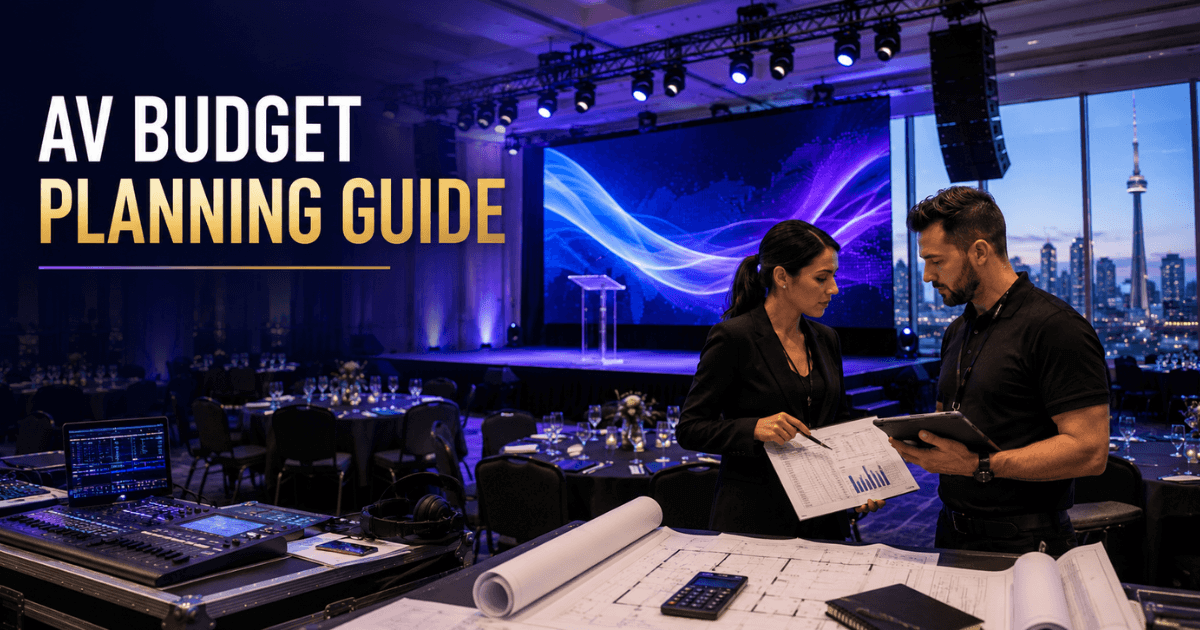
Behind every successful conference, corporate meeting, gala dinner, trade show, or product launch is a carefully planned audiovisual budget. While venue rental and catering often receive the most attention, AV production is what brings an event to life. Clear sound, impactful visuals, professional lighting, and seamless presentations all contribute to an engaging attendee experience.
Unfortunately, many organizers underestimate AV requirements or allocate their budget too late in the planning process. This often leads to last-minute equipment upgrades, unexpected labour costs, or technical compromises that could have been avoided with better planning.
Whether you’re organizing a small executive meeting or a large multi-day conference, understanding how AV budgets are built will help you invest where it matters most while avoiding unnecessary expenses.
At Summit Event Production, we work with businesses, associations, government organizations, and event planners across Toronto to develop production budgets that match each event’s goals. Whether you need Conference Event Management, Corporate Event Planning, or complete Conference & Summit Production, budgeting starts with understanding the technology required to deliver a successful event.
Why AV Budget Planning Matters
Audiovisual production is much more than renting speakers and microphones. It includes every technical element that supports presentations, communication, audience engagement, and live event operations.
A well-planned AV budget helps you:
- Allocate resources effectively
- Prioritize essential technology
- Prevent unexpected expenses
- Improve attendee experience
- Support presenters with reliable equipment
- Reduce last-minute changes
- Ensure smooth event execution
Instead of asking, “How much will AV cost?” the better question is, “What technology does my event actually need?”
Understanding the Main Components of an AV Budget
Every event is different, but most AV budgets are divided into several core categories.
Audio Systems
Clear audio is essential regardless of the event size. Even the best presentations lose impact if attendees cannot hear the speaker.
Typical audio expenses include:
- Professional speaker systems
- Wireless microphones
- Podium microphones
- Digital audio mixers
- Stage monitors
- Audio processing equipment
For larger conferences and live events, many organizers also invest in professional Audio Reinforcement Services to ensure consistent sound coverage throughout the venue.
Video & Display Technology
Visual communication has become one of the largest investments for modern events. Depending on your audience size and venue, this may include projection systems, LED displays, confidence monitors, or multi-screen presentations.
Common budget items include:
- LED Wall Rental
- Presentation displays
- Projection systems
- Confidence monitors
- Video switchers
- Playback systems
Choosing the right display technology depends on room size, viewing distance, ambient lighting, and presentation content.
Production Lighting
Lighting affects both the appearance of the venue and the overall production quality. Proper lighting improves audience engagement, enhances stage presence, and creates a professional atmosphere.
Typical lighting costs may include:
- Stage lighting
- Speaker lighting
- Intelligent moving lights
- Uplighting
- Audience lighting
- Architectural lighting
Professional Production Lighting Design ensures every session looks polished while supporting photography, video recording, and live streaming.
Video Production
Many conferences and corporate events now include professional video production for recording, live displays, and post-event content.
Video production budgets may include:
- Camera operators
- Broadcast cameras
- Live switching
- Recording
- Presentation playback
- Image Magnification (IMAG)
Organizations hosting keynote presentations often combine these services with Video Production & IMAG Services to improve visibility for attendees seated farther from the stage.
Staging & Scenic Design
A stage is more than a platform—it creates the visual centerpiece of your event.
Budget considerations often include:
- Custom stages
- Branded backdrops
- Podiums
- Scenic elements
- Truss structures
- Stage skirting
Professional Scenic Design & Custom Staging helps transform ordinary event spaces into engaging presentation environments while supporting branding and audience experience.
Registration Technology Should Be Part of Your AV Budget
Many organizers separate registration from AV, but modern events often integrate both to create a smoother attendee experience.
Technology investments may include:
- Self-service registration kiosks
- Badge printing
- Digital check-in
- Audience interaction tools
- Meeting timers
- Digital signage
Depending on your event, integrating Registration & Check-in Solutions with Registration Kiosk Rental and Audience Response Systems can improve attendee flow while reducing staffing requirements.
Event Type Determines Your AV Budget
No two events require the same production setup. The technology needed for an executive board meeting differs significantly from what is required for a trade show or product launch.
Conferences & Summits
Conferences typically require professional audio systems, LED displays, presentation technology, breakout room AV, livestream capabilities, and technical management. Many organizations combine Conference & Summit Production with complete AV services to deliver a seamless attendee experience.
Trade Shows
Trade shows often involve multiple presentation areas, exhibitor technology, registration systems, digital signage, sponsor activations, and interactive displays. Working with a dedicated Trade Show Production team helps coordinate these moving parts efficiently.
Gala & Awards Events
Awards ceremonies and gala dinners typically allocate a larger portion of the AV budget to elegant lighting, scenic staging, LED backdrops, teleprompters, entertainment support, and live camera production. These events often benefit from specialized Gala & Awards Event Production services.
Product Launches
Product launches prioritize visual impact and audience engagement. Budgets frequently include LED video walls, synchronized lighting, custom staging, multimedia playback, and live streaming. Complete Product Launch Event Production services help ensure every product reveal is delivered with maximum impact.
Venue Selection Can Affect Your AV Budget
The venue you choose plays a significant role in determining your audiovisual budget. Every venue has different technical capabilities, loading access, ceiling heights, power availability, internet infrastructure, and installation requirements.
Some venues already have basic audiovisual systems installed, while others require a complete production setup.
Popular venues such as Metro Toronto Convention Centre, Beanfield Centre, Enercare Centre, and Toronto Congress Centre all have different operational requirements that can influence labour, equipment, and installation costs.
Choosing a venue that aligns with your technical requirements often reduces unnecessary expenses while simplifying production logistics.
Live Streaming & Hybrid Events Require Additional Budget Planning
Virtual participation has become a standard requirement for many conferences, summits, and corporate meetings. While hybrid events expand audience reach, they also introduce additional production requirements that should be included in your AV budget from the beginning.
Additional budget items may include:
- Broadcast cameras
- Video switchers
- Streaming encoders
- Streaming platform integration
- Internet redundancy
- Remote presenter support
- Recording
- Live graphics
- Technical operators
Many organizations combine Virtual & Hybrid Event Production with Video Production & IMAG Services to create a seamless experience for both onsite and remote audiences.
Equipment Rental vs Equipment Ownership
Some organizations consider purchasing AV equipment to reduce long-term expenses. However, for most businesses and event organizers, renting is the more practical and cost-effective option.
Equipment rental provides access to professional-grade technology without worrying about:
- Equipment maintenance
- Storage
- Transportation
- Software updates
- Equipment depreciation
- Technical setup
- Repairs
Common rental items include:
For one-time events or annual conferences, renting almost always provides better value than purchasing equipment.
Audience Size Directly Impacts AV Costs
The number of attendees influences nearly every aspect of your AV budget. Larger audiences require greater audio coverage, larger display systems, additional lighting, more technicians, and increased technical coordination.
Small Events (20–100 Guests)
Typical AV requirements include:
- Presentation display
- Small audio system
- Wireless microphones
- Basic stage lighting
- Laptop presentation support
Medium Events (100–500 Guests)
Production requirements generally expand to include:
- LED video wall
- Professional audio system
- Scenic staging
- Multiple wireless microphones
- Camera production
- Registration technology
- Technical management
Large Events (500–2,000+ Guests)
Larger conferences, exhibitions, and conventions often require:
- Multiple LED walls
- IMAG systems
- Multi-room AV
- Professional lighting
- Live streaming
- Registration technology
- Show calling
- Dedicated production managers
- Technical crew
- Wayfinding displays
As attendance grows, production planning becomes increasingly important to maintain a consistent attendee experience.
Hidden AV Costs Many Organizers Overlook
One of the most common budgeting mistakes is focusing only on equipment rental while overlooking the operational costs required to deliver a successful event.
Frequently overlooked expenses include:
- Delivery and transportation
- Equipment setup and dismantling
- Labour costs
- Venue power distribution
- Rigging approvals
- Internet connectivity
- Rehearsals
- Overtime charges
- Backup equipment
- Technical testing
- Equipment insurance
- Contingency planning
Accounting for these items during the planning phase helps reduce unexpected costs later in the project.
How to Optimize Your AV Budget
A larger budget doesn’t always produce a better event. Smart planning ensures your investment is directed toward the technology that delivers the greatest value for attendees.
Define Your Event Objectives
Before selecting equipment, determine what your audience needs to see, hear, and experience. Clear objectives help eliminate unnecessary technology while prioritizing essential production elements.
Bundle Production Services
Working with multiple vendors often increases communication challenges and coordination costs. A single production partner can manage planning, AV, staging, lighting, registration, and technical operations more efficiently.
Organizations frequently combine Conference Event Management with Audio Reinforcement Services, Production Lighting Design, and Technical Direction & Show Calling to streamline production and simplify project management.
Choose Technology Based on Need
Not every event requires the largest LED wall or the most advanced lighting system.
Select equipment based on:
- Audience size
- Viewing distance
- Venue dimensions
- Presentation style
- Content type
- Budget priorities
Matching technology to your actual event requirements often produces better results than simply choosing the most expensive equipment.
Plan Early
Early planning gives you more flexibility when selecting venues, reserving equipment, scheduling technical crews, and coordinating rehearsals.
It also helps avoid premium pricing associated with last-minute bookings and limited equipment availability.
Build a Detailed AV Budget
A comprehensive AV budget should outline every technical requirement before contracts are finalized.
This includes:
- Equipment
- Labour
- Transportation
- Technical crew
- Venue requirements
- Internet
- Rehearsals
- Backup systems
- Contingency allowance
Careful planning provides greater cost transparency while reducing financial surprises throughout the production process.
Sample AV Budget Allocation
Every event has different priorities, but dividing your budget into major production categories helps ensure no essential element is overlooked.
| Budget Category | Typical Focus |
|---|---|
| Audio Systems | Speakers, microphones, digital mixers, audio engineers |
| Video & Display | LED video walls, projection, presentation displays, confidence monitors |
| Lighting | Stage lighting, uplighting, intelligent fixtures, audience lighting |
| Staging & Scenic | Stage platforms, backdrops, truss, scenic elements |
| Video Production | Cameras, IMAG, recording, live switching |
| Registration Technology | Check-in systems, kiosks, badge printing, audience engagement |
| Technical Crew | Production managers, AV technicians, lighting operators, camera crew |
| Logistics & Labour | Delivery, setup, teardown, transportation |
| Contingency | Emergency equipment, schedule changes, unexpected requirements |
Rather than assigning a fixed percentage to each category, allocate your budget based on the event objectives, audience expectations, and technical requirements.
Questions to Ask Before Approving an AV Quote
Not all AV proposals include the same services. Before making a decision, review exactly what is included in the quotation.
Ask questions such as:
- Does the quotation include delivery, setup, and teardown?
- Are onsite technicians included throughout the event?
- Are rehearsals covered?
- Is backup equipment available if something fails?
- Does the proposal include transportation and labour?
- Are venue coordination and installation included?
- Can equipment be upgraded if event requirements change?
- Are overtime charges explained in advance?
Understanding these details helps you compare proposals fairly rather than focusing only on the lowest price.
Why Working With One Production Partner Saves Money
Many organizations hire separate vendors for lighting, sound, staging, registration, livestreaming, and staffing. While this may appear cost-effective initially, it often creates communication gaps, scheduling conflicts, and duplicated costs.
Working with a single production company provides several advantages:
- One dedicated project manager
- Better coordination between technical teams
- Simplified communication
- Consistent equipment quality
- Faster problem resolution
- Reduced logistical complexity
- More efficient scheduling
- Better overall budget control
A unified production approach also reduces the risk of technical issues caused by multiple suppliers working independently.
Common AV Budget Mistakes to Avoid
Even experienced event planners can make budgeting mistakes that impact the success of an event. Being aware of these issues can help you avoid unnecessary costs and last-minute stress.
Waiting Too Long to Book Equipment
Popular venues and peak event seasons can limit equipment availability. Early booking provides more options and better scheduling flexibility.
Underestimating Technical Labour
Professional equipment still requires experienced technicians to install, test, operate, and dismantle everything safely.
Choosing Equipment Based Only on Price
The least expensive option isn’t always the best value. Reliability, technical support, and equipment quality often have a greater impact on the attendee experience.
Forgetting Rehearsals
Speaker rehearsals and equipment testing help identify technical issues before attendees arrive, reducing the risk of delays during live presentations.
Ignoring Backup Plans
Unexpected equipment failures are rare but possible. Including backup microphones, playback devices, and presentation systems in your budget helps minimize disruption.
Planning Your AV Budget for Different Event Types
Each event format has different technical priorities, so your budget should reflect those specific needs.
Conferences & Summits
Focus on presentation technology, professional audio, breakout room AV, live streaming, registration systems, and technical management. Pairing Conference & Summit Production with professional AV support creates a seamless experience for speakers and attendees.
Trade Shows
Allocate more budget toward exhibitor support, digital signage, booth technology, registration, interactive displays, and wayfinding. Many organizers also integrate Trade Show Booth Building with Trade Show Production for a cohesive exhibition experience.
Gala & Awards Events
Lighting, scenic staging, teleprompters, entertainment support, and live camera production are often the highest priorities. Investing in Production Lighting Design helps create an elegant atmosphere while supporting photography and video coverage.
Product Launches
Product launches rely heavily on visual impact. LED displays, multimedia playback, synchronized lighting, and audience engagement technology often make up a significant portion of the AV budget. Complete Product Launch Event Production services ensure every reveal is delivered with precision.
Frequently Asked Questions
How much should I allocate for AV production?
There is no universal percentage. Your AV budget depends on the event type, audience size, venue, production complexity, and technical requirements. Building a detailed production plan before finalizing the budget is the best approach.
What is included in an AV production budget?
An AV budget typically includes audio systems, video displays, LED walls, lighting, staging, video production, registration technology, technical crew, transportation, labour, setup, teardown, and contingency planning.
Is renting AV equipment more cost-effective than buying?
For most events, yes. Renting provides access to professional equipment, technical support, delivery, installation, and the latest technology without long-term ownership costs.
Should live streaming be included in the AV budget?
If remote attendees are expected, live streaming should be planned from the beginning. This ensures sufficient budget is allocated for cameras, streaming infrastructure, internet connectivity, and technical operators.
How can I reduce AV costs without affecting quality?
Start planning early, choose technology based on your event’s actual needs, work with a single production partner where possible, and avoid unnecessary upgrades that don’t improve the attendee experience.
Does venue selection affect AV costs?
Yes. Every venue has different technical capabilities, installation procedures, power availability, and operational requirements, all of which can influence production costs.
Final Thoughts
A successful AV budget isn’t about spending the most—it’s about investing in the right technology, experienced technical professionals, and efficient planning. Understanding your event objectives, selecting appropriate equipment, and planning well in advance will help you maximize value while delivering a seamless experience for your attendees.
As you continue planning your event, our Event Production Cost Guide in Toronto provides a broader look at overall production expenses, while the Event Equipment Rental Guide explains how to choose the right equipment for different event types. If you’re still comparing production partners, our How to Choose the Right Event Production Company offers practical advice to help you make an informed decision before your next event.